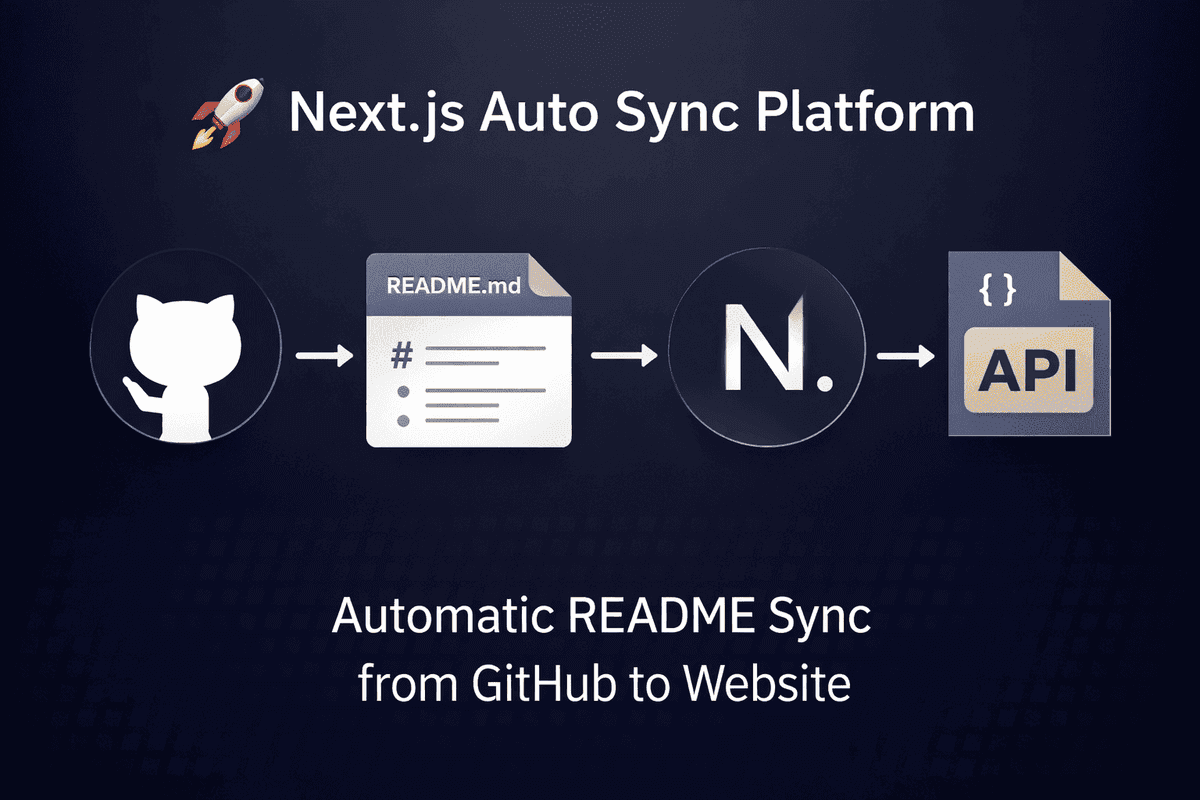
A proof-of-concept platform that automatically syncs GitHub README content to a live website using Next.js, MongoDB, API keys, and GitHub Actions.
This project demonstrates an automated content publishing system that synchronizes GitHub README files with a live website.
Instead of manually copying documentation into a CMS or website editor, the platform automatically updates website content whenever changes are pushed to the repository.
The system combines GitHub Actions, secure API authentication, a MongoDB database, and a Next.js web application to create a fully automated publishing pipeline.
What This Project Demonstrates
The platform showcases several important engineering concepts used in modern development infrastructure.
Secure API-Based Content Publishing
Each project created on the website generates a unique API key. This key is used by GitHub Actions to authenticate requests when updating content.
This ensures that only authorized repositories can publish updates to the website.
GitHub Actions → Website Sync
Whenever the repository README changes, a GitHub workflow automatically triggers.
The workflow sends the updated content to the website's API, where it is stored in the database and rendered by the website.
This creates a fully automated documentation pipeline.
Server-Side Rendering with Next.js
The website uses the Next.js App Router to render content dynamically from MongoDB.
When the README content updates in the database, the website reflects the changes immediately without requiring a redeployment.
Markdown Rendering
README content is written in Markdown and rendered as HTML on the website.
This allows developers to maintain documentation using standard GitHub Markdown while still publishing rich formatted pages.
System Architecture
The platform connects GitHub and the website using an automated workflow pipeline.
GitHub Repository
        │
        ▼
README.md Updated
        │
        ▼
GitHub Actions Workflow
        │
        ▼
Secure API Request
        │
        ▼
Next.js API Route
        │
        ▼
MongoDB Content Update
        │
        ▼
Next.js Page Rendering
        │
        ▼
Live Website Content
This architecture ensures that documentation remains synchronized automatically.
Tech Stack
Frontend
Next.js (App Router)
Backend
Next.js API Routes
Database
MongoDB Atlas
Automation
GitHub Actions
Authentication
API Key per project
Hosting
Vercel
Example Markdown Rendering
The system supports standard Markdown features including code blocks, lists, and quotes.
Code Block
export async function syncContent() {
  console.log("README synced successfully 🚀");
}
List
Auto-sync enabled
API secured
Database updated
UI refreshed
Quote
Content should update itself. Humans shouldn’t have to.
Live Demo
Content Page: https://next-js-auto-sync-platform.vercel.app/content/nextjs-auto-sync-platform
Repository: https://github.com/coderooz/Next.js-Auto-Sync-Platform
Why This Project Matters
In many projects, documentation becomes outdated because publishing requires manual effort.
By turning GitHub repositories into the source of truth for content, this system enables documentation to stay synchronized automatically.
This concept can evolve into:
documentation platforms
developer portals
automated blogging systems
GitHub-driven CMS platforms